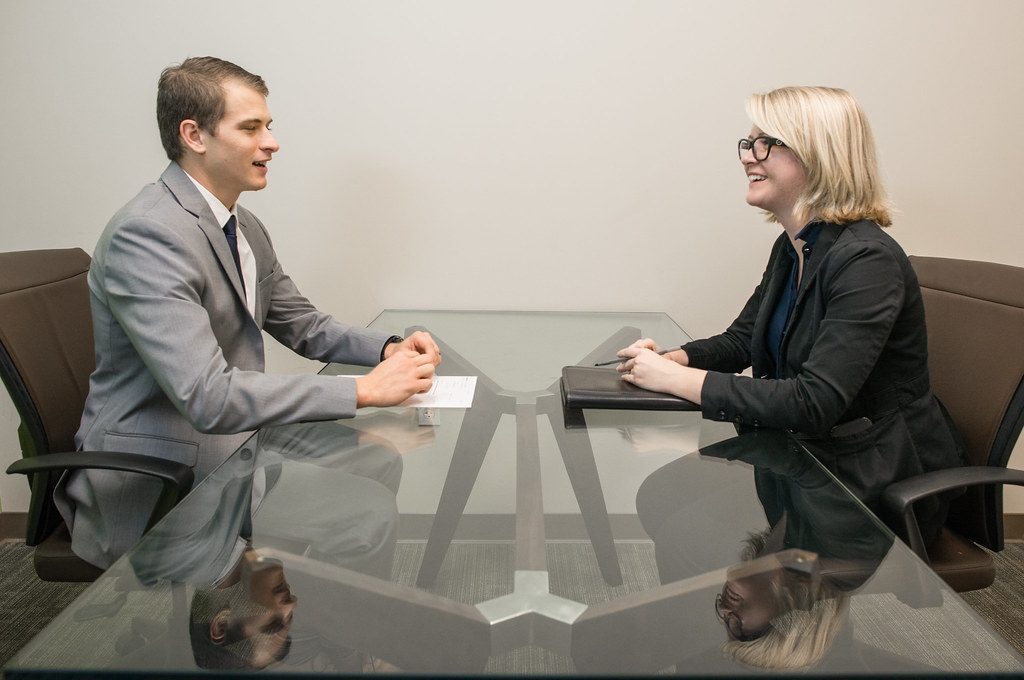
Many people have the expertise, skills and qualifications an employer is looking for, yet struggle to communicate their strengths effectively during an interview. The reality is that interviews aren’t just about your ability to do the job. They’re about how effectively you communicate your skills and experience, the evidence you provide through your examples, and how clearly you demonstrate your suitability for the role.
I’ve helped hundreds of people improve their interview skills and secure their chosen roles. If they can improve, so can you!
So, where should you focus your efforts? Here are the five key areas I recommend working on to improve your interview performance and give yourself the best chance of success. These form the foundations of my interview skills training, whether you choose one-to-one interview coaching or my online interview skills training course.
1. Understand what recruiters are looking for
Your first step is to understand what the interview is assessing, so you can demonstrate this in every answer. This involves analysing the job description or person specification and identifying the skills, experience and qualities the employer is likely to explore during the interview.
2. Choose the right examples
Many interview questions ask examples which the interviewer assesses as evidence of your skills and experience. Your strongest examples are those that allow you to demonstrate the specific skill , clearly explain what you personally did and what this achieved. Prior to the interview consider your best examples and prepare a bank of examples which can be adapted to answer a range of interview questions.
3. Structure your answers
Use the STAR technique to structure answers to competency and behavioural interview questions. This helps you to focus your answers and demonstrate your skills.
- Situation – What was the context?
- Task – What did you need to achieve?
- Action – What did you personally do?
- Result – What happened as a result?
Practice structuring your answers and delivering examples using this technique. Ensure you explain your actions, and what you achieved. You may wish to read this article for more information about how to use the STAR technique.
4. Improve the content of your answers
The content of your answer has a much greater impact on your interview score than how fluently you deliver your answers.
Consider whether your answers:
- Directly answer the question
- Demonstrate the relevant skill
- Explain what you did, and what this achieved for past examples
- Provide enough evidence
- Clearly and concisely provide the information the interviewer needs
5. Improve how you deliver your answers
Once you’ve improved the content of your answers you can move on to improving the delivery of your answers. Consider:
- The impression your make
- Your eye contact body language
- Building your confidence
- How you phrase your answers
- Practise your answers out loud. Consider recording yourself or gaining feedback from a friend or relative.
- Constructively assess the content and delivery of your interview answers. Do you sound rehearsed? Speech usually contains pauses “um” and “er” so don’t try to remove them entirely.
Your aim is to prepare, practice and build confidence in your ability to answer effectively so you can respond naturally during the interview.
Improving Your Interview Skills
You don’t need to be an eloquent or naturally gifted speaker to deliver excellent interview answers. You need to understand what employers are looking for, learn how to prepare effectively and practice your interview skills.
At Interview Success I offer an online interview skills training course and one-to-one interview skills coaching to teach you what recruiters are looking for, how to choose stronger examples, structure your answers, prepare effectively from a job description and improve both the content and delivery of your answers.
Online Interview Skills Training Course
The course brings together the key knowledge, techniques and practical resources I use in my one-to-one interview coaching, in a self-paced online format. It provides a structured approach to improving your interview skills, covering three key areas:
What recruiters are looking for
You’ll learn how to choose and structure your examples, use the STAR technique and approach different types of interview questions.
How to prepare effectively
You’ll learn how to use a job description to prepare, predict likely questions, sell your skills and experience, research the organisation and prepare questions to ask at interview.
Improving the content and delivery of your interview answers
You’ll improve on the content and delivery of your answers, including conciseness, avoiding common interview mistakes and practising / improving your interview technique.
The course also includes practical resources, an interview preparation plan, checklist and mock interview guide to help you put what you’ve learned into practice. It’s designed for you to work through at your own pace, whether you’re preparing for an interview that’s coming up soon or want to develop your interview skills for future opportunities. I
Discover more about the Online Interview Skills Training Course and One-to-One Interview Coaching
With the right preparation, structure and practice, you can significantly improve your interview performance.
If you’d like a structured approach to your interview preparation, you can find out more about the Online Interview Skills Training Course, personally tailored one-to-one interview skills coaching or compare the interview skills training course with interview coaching.