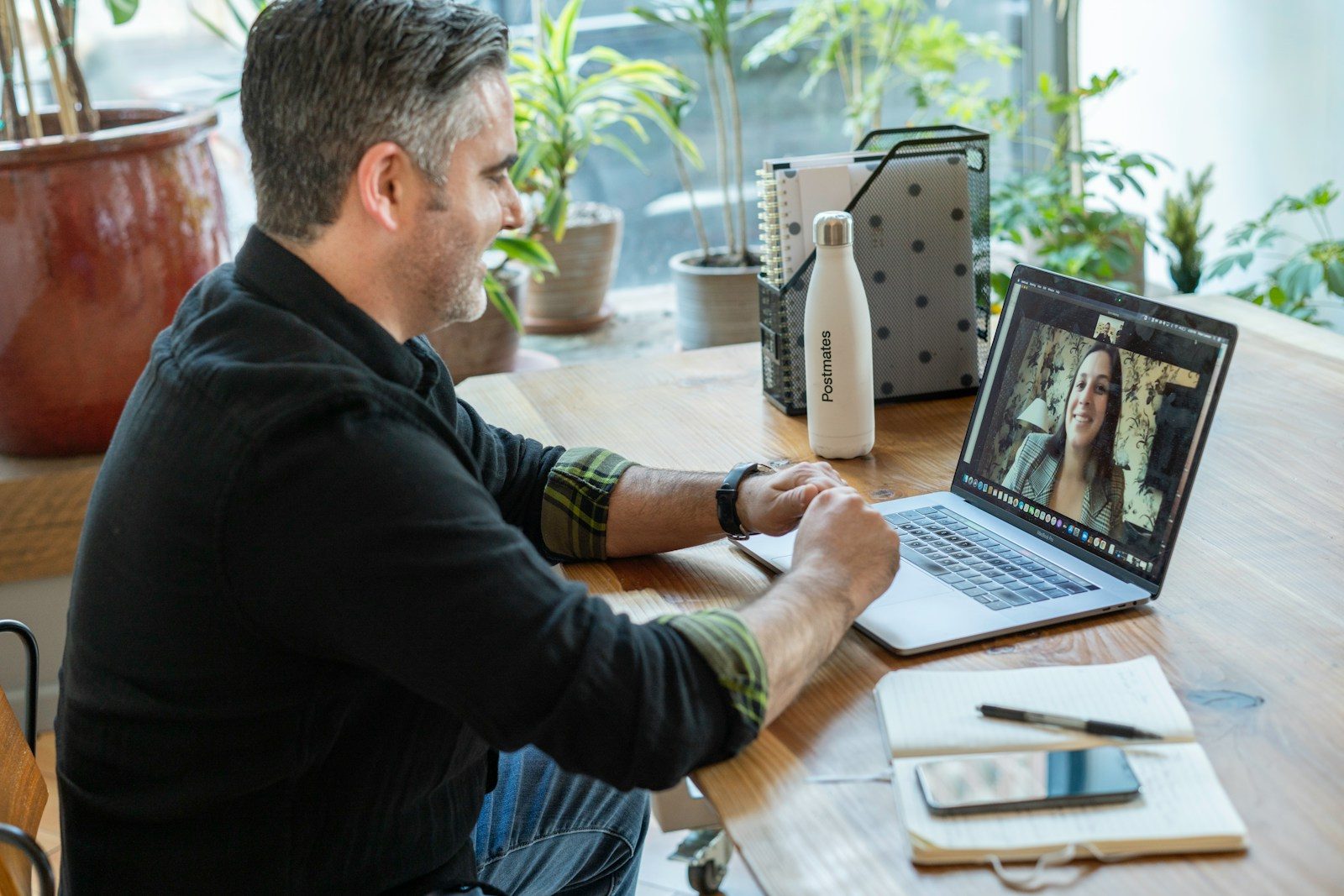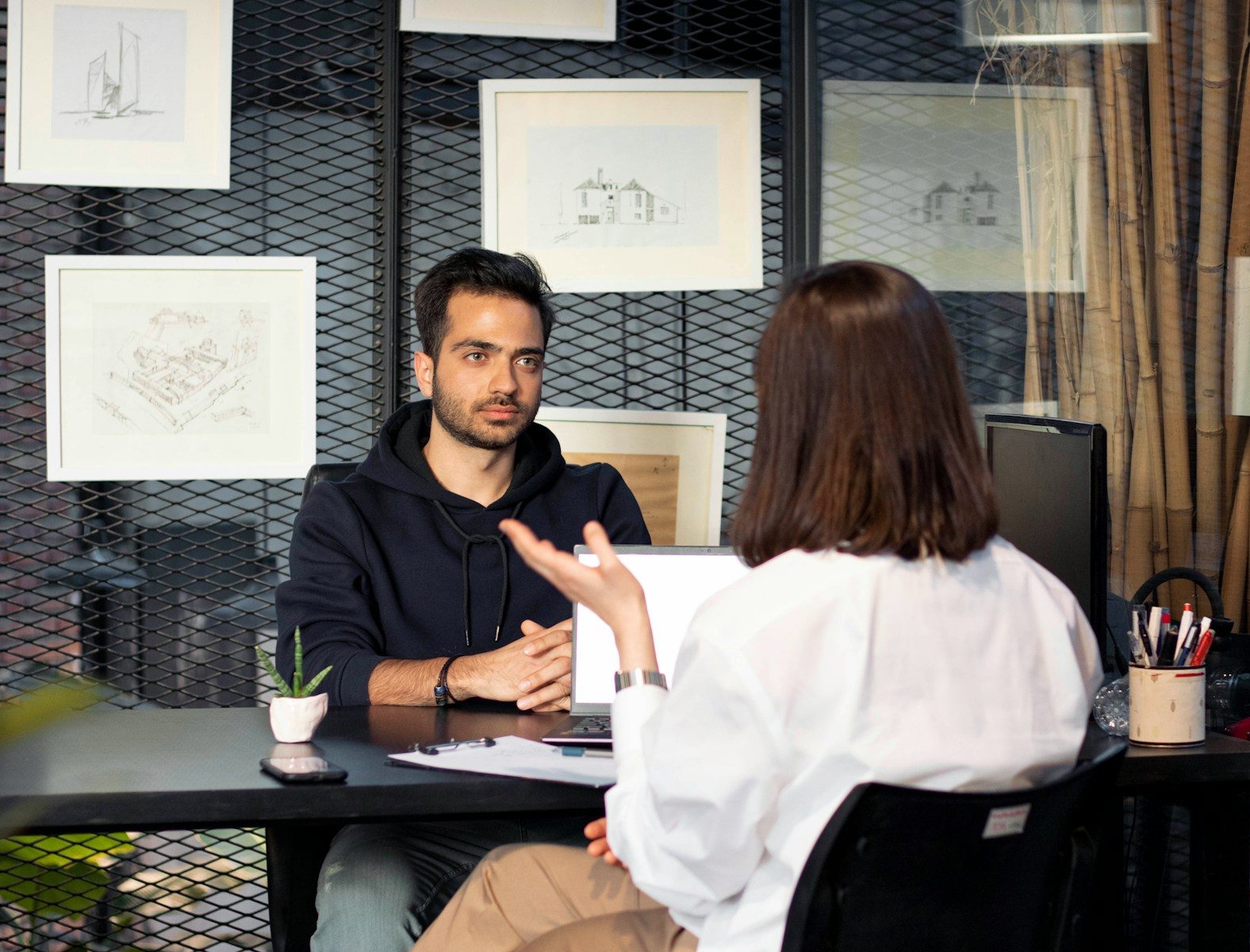
Online interviews have become a common part of the recruitment process. Whether you’re applying for your first job, looking for a career change or taking the next step in your career, there’s a good chance you’ll be asked to attend a video interview at some point.
Although an online interview is often more convenient than travelling to meet an employer in person, it still requires careful preparation. You need to communicate your skills and experience effectively, demonstrate your suitability for the role and make a positive impression, all while speaking to a screen.
The good news is that online interview skills can be learned and improved with the right preparation and practice.
As an interview coach, I’ve helped hundreds of people develop their interview skills and secure the roles they want. In this guide, I’ll share ten practical tips to help you prepare for your next online interview, feel more confident and give yourself the best chance of success.
1. Research the employer and the role
One of the biggest mistakes you can make is preparing for an interview without fully understanding what the employer is looking for.
Before your interview, take time to research the organisation, the role and the skills and experience required.
Start by reviewing the job description and person specification. Identify the essential criteria and consider how your skills, knowledge and experience match each requirement.
Research the employer’s website to learn about its services, values, priorities and recent developments. If relevant, look at its social media pages and recent news.
Think about the following questions:
- What does the organisation do, and who does it serve?
- What are its main priorities or challenges?
- What skills and experience are most important for this role?
- What can I offer that would make me a strong candidate?
The aim isn’t to memorise everything about the organisation. It’s to understand the role well enough to explain why you’re interested in it and what you can bring to the team.
Top tip: Keep a copy of the job description nearby during your preparation. It will help you focus your interview examples on the requirements that matter most to the employer.
2. Prepare answers to common interview questions
You can’t predict every question you’ll be asked, but you can prepare for many of the questions that commonly come up in interviews.
These might include:
- Tell me about yourself.
- Why do you want this job?
- What do you know about our organisation?
- What are your strengths?
- Tell me about a time you dealt with a difficult situation.
- Describe a time you worked effectively as part of a team.
- What would you bring to this role?
Rather than writing lengthy answers and trying to memorise them word for word, prepare key points that you want to communicate.
For example, when answering “Tell me about yourself”, focus on your relevant experience, key strengths and reasons for applying. Keep your answer structured and make sure it relates to the role.
For competency-based questions, prepare examples that demonstrate the skills and behaviours the employer is looking for.
A useful technique is the STAR method:
- Situation: Briefly explain the context.
- Task: Describe what you needed to achieve.
- Action: Explain what you personally did.
- Result: Share the outcome and, where possible, what you learned.
Your examples should provide evidence of your abilities rather than simply stating that you’re good at something.
Top tip: Practise saying your answers out loud. An answer that looks excellent on paper may sound unnatural or too long when spoken.
3. Set up your interview space
Your surroundings can influence how confident and professional you appear during an online interview.
Ideally, choose a quiet space where you won’t be interrupted and let other people in your household know when your interview is taking place,
Check the following:
- Background: Choose a tidy, uncluttered background that won’t distract the interviewer.
- Lighting: Position yourself so that your face is clearly visible. Natural light from in front of you can work well.
- Camera position: Place your camera at approximately eye level so you aren’t looking down at the interviewer.
- Seating: Sit comfortably upright, with your face and shoulders clearly visible.
- Noise: Close unnecessary applications and minimise background noise.
- Distractions: Silence your phone and turn off notifications on your computer.
You don’t need an expensive home office or professional equipment. A simple, tidy space with good lighting and minimal distractions is usually sufficient. The important thing is to create an environment that allows you to concentrate on the conversation.
4. Test your technology before the interview
Technical problems can be stressful, particularly when you’re already feeling nervous about an interview.
Avoid leaving everything until the last minute. Check your equipment and the interview platform in advance. Interviews often take place on platforms such as Microsoft Teams, Zoom or Google Meet. Make sure you know how to access the meeting and whether you need to download software or create an account.
Test your:
- Internet connection.
- Camera and microphone.
- Speakers or headphones.
- Interview link and login details.
- Display name and profile picture.
If you’re using headphones, check that the microphone works and that you can hear clearly. If you’re using a laptop, make sure it’s fully charged or plugged into a power supply. Have a backup plan in case something goes wrong. Keep the interviewer’s contact details available so you can let them know if you experience a technical problem.
Top tip: Log in around 5–10 minutes before your scheduled interview time, allowing yourself enough time to resolve any last-minute issues.
5. Dress appropriately for the interview
Choose an outfit that you would feel comfortable wearing to an interview in person and ensure that it is appropriate for the organisation and role you are applying for. Dressing appropriately helps you to feel prepared and professional, making it easier to approach the interview with confidence.
Remember that the interviewer will usually see only your upper body, but dressing fully can help you feel ready for the occasion.
6. Prepare examples that demonstrate your skills
One of the most important aspects of interview preparation is choosing the right examples.
Employers need evidence that you can do the job. Simply saying that you’re organised, a good communicator or an effective problem-solver isn’t enough. You need to demonstrate these qualities through relevant examples.
Review the job description and identify the key skills and behaviours required. Then think about situations in which you’ve demonstrated them.
For each example, consider what the situation was, what you needed to achieve, what actions you took and what the outcome was.
Be specific about your own contribution. If you worked as part of a team, explain what you personally did rather than relying entirely on what the team achieved.
Top tip: Choose examples that are closely related to the requirements of the role, and practise adapting them to different questions where appropriate.
7. Practise your online interview technique
Answering questions well is only part of performing effectively in an online interview. You also need to consider how you communicate through a screen.
Without the usual face-to-face environment, some aspects of communication can feel less natural. You might find yourself looking at the video of the interviewer rather than the camera, speaking too quickly or struggling to judge when to respond.
Practise the following:
Look towards the camera when speaking. This helps create the impression of eye contact. You can still look at the screen when listening.
Speak clearly and at a steady pace. Nerves can make you rush your answers. Pause briefly before responding and give yourself time to think.
Use positive body language. Sit upright, keep your shoulders relaxed and use natural facial expressions and gestures.
Listen carefully. Make sure you understand the question before answering. If you’re unsure what the interviewer means, it’s perfectly acceptable to ask for clarification.
Keep your answers focused. Give enough detail to demonstrate your skills, but avoid going off on tangents or including information that isn’t relevant.
One of the best ways to improve is to practise using your camera. Record yourself answering a few interview questions and watch the recording back. Notice your pace, clarity, body language and the structure of your answers. It might feel uncomfortable at first, but it can help you identify areas to improve before the real interview.
8. Remember that an online interview is still a conversation
It’s easy to become so focused on giving the right answers that you forget an interview is also an opportunity to build rapport with the interviewer.
Try to approach the conversation as an opportunity to explain what you can offer and learn more about the role.
Listen carefully to the questions, acknowledge what the interviewer says and respond naturally. If a question requires a moment’s thought, take a brief pause rather than feeling you must answer immediately.
Don’t be afraid to show your enthusiasm for the position. Explain what interests you about the opportunity and why you believe the role is a good match for your skills and experience.
At the same time, avoid trying to deliver perfect, rehearsed answers. Your preparation should help you communicate clearly and confidently, not make you sound as though you’re reading from a script.
Remember: You don’t need to eliminate every sign of nervousness to perform well. The aim is to communicate your strengths and suitability as effectively as you can.
9. Prepare questions to ask the interviewer
Most interviews include an opportunity for you to ask questions. This is your chance to find out more about the position and demonstrate that you’ve thought carefully about the opportunity.
Prepare two or three questions in advance. For example:
- What would success look like in this role during the first six months?
- What are the main priorities for the person joining the team?
- How would you describe the team and its working culture?
- What opportunities are there for learning and development?
- What are the next steps in the recruitment process?
Choose questions that are relevant to the role and haven’t already been answered during the interview.
Avoid asking questions simply for the sake of it. Focus on information that will help you understand the position and decide whether it’s right for you.
Remember, an interview is a two-way process. The employer is assessing your suitability, whilst you’re deciding whether you want to work for this organisation and whether the role is right for you.
10. Plan what to do after the interview
Your preparation shouldn’t end when the interview finishes.
Beforehand, check whether the employer has provided any information about what happens next. They may explain when you can expect to hear back or whether there will be another stage in the recruitment process.
After the interview, take a few minutes to reflect.
Consider which questions you answered well, where you could have provided stronger examples and whether there was anything you found difficult.
If you have another interview coming up, these reflections can help you identify what to practise next time.
Even if you don’t receive the outcome you hoped for, try to treat the experience as an opportunity to learn. Each interview can help you develop your skills and become better prepared for future opportunities.
Final thoughts: Preparation builds confidence
Preparing for an online interview involves much more than checking that your camera works and finding a quiet place to sit.
You need to understand what the employer is looking for, prepare relevant examples, practise communicating your skills and develop the confidence to present yourself effectively.
The good news is that interviewing is a skill, and like any skill, it can be developed with practice.
If you find interviews difficult, struggle to think of examples or feel unsure how to communicate your experience, you’re not alone. Many capable people find it challenging to demonstrate their strengths under interview conditions. The key is to identify which areas you need to improve and practise them before your next interview.
Need help preparing for your next interview?
If you’d like to develop your interview skills, I offer one-to-one interview coaching and an online interview skills training course to help you prepare more effectively, structure your answers and communicate your strengths with confidence.
Whether you have a specific interview coming up or want to improve your skills for future opportunities, the right preparation can make a real difference.
Explore my interview skills training options and take the next step towards interview success.