A panel interview may feel more intimidating than a traditional one-to-one interview. Instead of speaking with a single interviewer, you may be answering questions from several people, each with different priorities, experience and expectations. The good news is that with the right research, practice and approach, you can walk into the interview feeling confident, prepared and ready to engage with every member of the panel.
In this guide, we’ll explain how to prepare for a panel interview, what questions you might be asked, how to handle multiple interviewers and outline common mistakes so you can avoid making these.
What Is a Panel Interview?
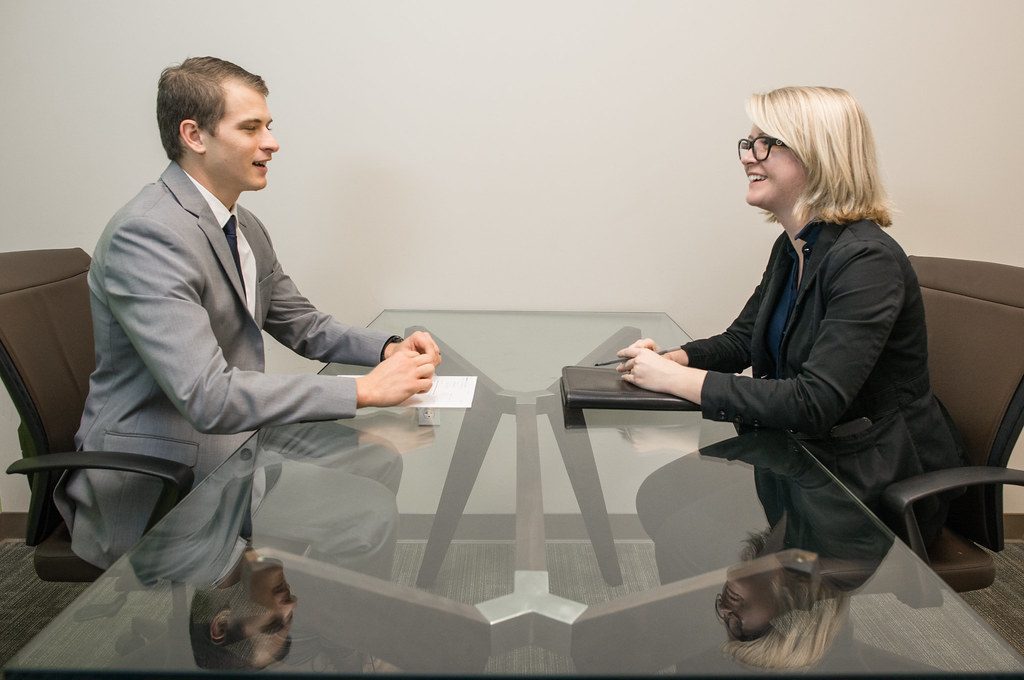
A panel interview involves two or more people assessing a candidate at the same time. The panel could include a hiring manager, department manager, HR representative, senior leader or potential colleagues. The exact structure varies depending on the organisation and the role.
Panel interviews allow several decision-makers to assess a candidate simultaneously reducing the need for multiple rounds of interviews. Each interviewer may focus on a different aspect of your experience, skills and suitability for the role.
How to Prepare for a Panel Interview
Preparing for a panel interview involves more than rehearsing answers. You need to understand the role, research the people interviewing you and prepare for a conversation involving several different perspectives. Here are the key steps to follow:
Research the Company
Before your panel interview, research the organisation thoroughly. Start with its website, particularly the company’s products or services, values, recent developments and information about the department you’re hoping to join. You should also understand the wider industry and the challenges the organisation may be facing. This research will help you give more relevant answers during the interview. Instead of simply describing what you have done in previous roles, you can explain how your experience is relevant to each specific organisation.
Your research may include:
- What does the company do?
- Who are its customers?
- What are its key products or services?
- What are its values?
- What challenges could affect the organisation?
- Why do you want to work there?
Your goal is to develop enough knowledge to have an informed conversation, rather than to memorise every detail from the website.
Find Out Who Will Be Interviewing You
If you know the names and job titles of the panel members in advance, research their backgrounds prior to the interview. You can do this via LinkedIn and the company’s website. Use this information to understand what each person is likely to be interested in hearing about.
An HR interviewer is likely to focus on areas such as behavioural competencies and culture whilst a technical manager is likely to ask detailed questions about your experience and problem-solving skills. This can make you feel more confident and prepared for panel interviews.
Just a note of caution; please be sensitive if you choose to share your research with the interviewers. I have interviewed alongside many managers who found it intrusive when candidates shared they had researched their backgrounds online. It is often better to avoid framing your research as “I see from LinkedIn you previously worked at…”
Study the Job Description
The job description is one of your most valuable interview preparation resources. Read it carefully to identify the main skills, responsibilities and experience the employer is looking for. You can then create a bank of your strongest examples, linked to the job description, which you can draw from during the interview. Some people find it helpful to create a simple table containing this information which can be tweaked for future interviews. You may find this blog post helpful for further guidance on preparing for interviews.
Prepare Examples Using the STAR Method
The STAR interview technique is particularly useful when preparing for panel interview questions which ask you to provide a specific example from the past. STAR stands for:
Situation – Explain the context.
Task – Describe what you needed to achieve.
Action – Explain what you personally did.
Result – Describe the outcome.
Aim to prepare several STAR examples covering the main areas of the role. This will make it easier to recall information during the interview and to answer unexpected questions without sounding rehearsed. Some people may wish to prepare full STAR based answers, other people may wish to simply identify which examples to use. It depends on your personality, confidence and ability to recall information.
You may wish to read this blog article for further information on how to use the STAR technique.
Practise Common Panel Interview Questions
Although you can’t predict every question you’ll be asked, practising common questions can improve your confidence. Some common panel interview questions include:
“Tell us about yourself.” Keep your answer relevant to the role. Focus on your professional background, key achievements and why the opportunity interests you.
“Why do you want to work for us?” Connect your answer to the organisation, the role and your own career goals.
“Why should we hire you?” Focus on the specific skills and experience you can bring to the position.
“Where do you see yourself in five years?” Explain your professional ambitions while showing that you’re interested in developing within the type of role you’re applying for.
Don’t try to memorise word-for-word answers. Instead, prepare key points and examples so your responses sound natural.
How to Answer Questions during a Panel Interview
One of the biggest differences between a panel interview and a traditional interview is your focus of attention. Look at the person who is asking you a question. As you answer, naturally make eye contact with the other panel members as well. This helps you engage with the entire panel rather than having a conversation with just one person. Try not to ignore the quieter members of the interview panel, they still have influence in the decision-making process.
You may wish to pause briefly before answering a difficult question. This can help you provide a structured and relevant answer rather than rushing into a response. If you don’t understand a question, ask the interviewer to clarify it. For example: “Could you clarify which aspect of the situation you’d like me to focus on?” This helps you to provide a relevant answer.
Prepare Questions to Ask the Interview Panel
At the end of most interviews, you’ll be asked whether you have any questions. Use this opportunity to demonstrate genuine interest in the role and learn more about the organisation. Good questions can include:
- What would success look like in this role after six months?
- What are the team’s biggest priorities at the moment?
- How would you describe the team’s working culture?
- What are the biggest challenges facing the person joining this role?
- How does the organisation support professional development?
- What are the next steps in the recruitment process?
Avoid asking questions which have already been answered during the interview as it looks like you weren’t listening. Avoid asking too many questions about salary, holidays or benefits as this can create the wrong impression.
Common Panel Interview Mistakes to Avoid
Recognising these common panel interview mistakes helps you to avoid making the same mistakes.
- Focusing on the interviewer who appears most engaged. Remember that the entire panel is assessing you.
- Giving long, unstructured answers. Keep your answers focused and structured. Use the STAR method for examples
- Sounding like you are reciting a script. Avoid over practising, vary your pitch and intonation and show your personality. Don’t hide behind a poker-face!
- Failing to ask questions. Prepare several questions in advance so you look interested in the opportunity.
Final Thoughts: How to Prepare for a Panel Interview
Knowing how to prepare for a panel interview can make it much less daunting. Research the organisation, understand the job description/person specification, anticipate likely areas of questions and prepare a range of examples which demonstrate your skills. A panel interview seeks to understand your experience, approach and suitability for the role. With thorough panel interview preparation, structured answers and confident communication, you’ll be in a much stronger position to make a positive impression.
Would you like to feel more confident and prepared for your next interview? My interview skills coaching sessions are designed to help you strengthen your answers, improve your confidence and develop practical techniques you can use in real interview situations. You can find out more on my interview coaching page, or contact me directly to discuss your goals and how I can tailor a coaching session to help you succeed.